
Understanding Whiplash and Other Common Neck Injuries
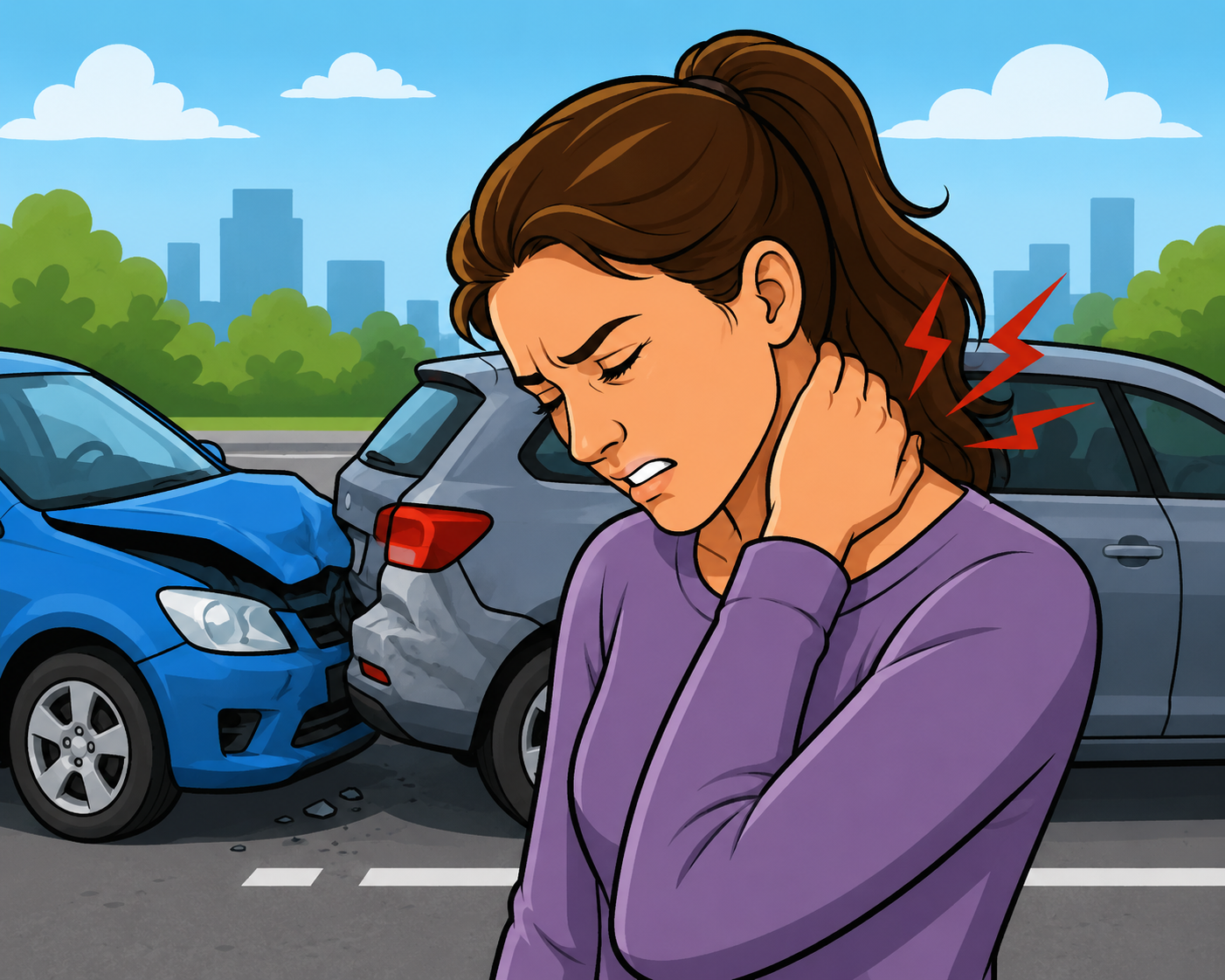
If you’ve recently been involved in a car accident, you may be wondering why your neck hurts—even if the crash seemed minor. Neck pain is one of the most common injuries after a motor vehicle collision, and symptoms do not always appear right away. Many people feel fine immediately after an accident, only to wake up the next day with stiffness, headaches, or significant pain.
So what exactly happens to the neck during a car accident?
The Neck Wasn’t Designed for Sudden Impacts
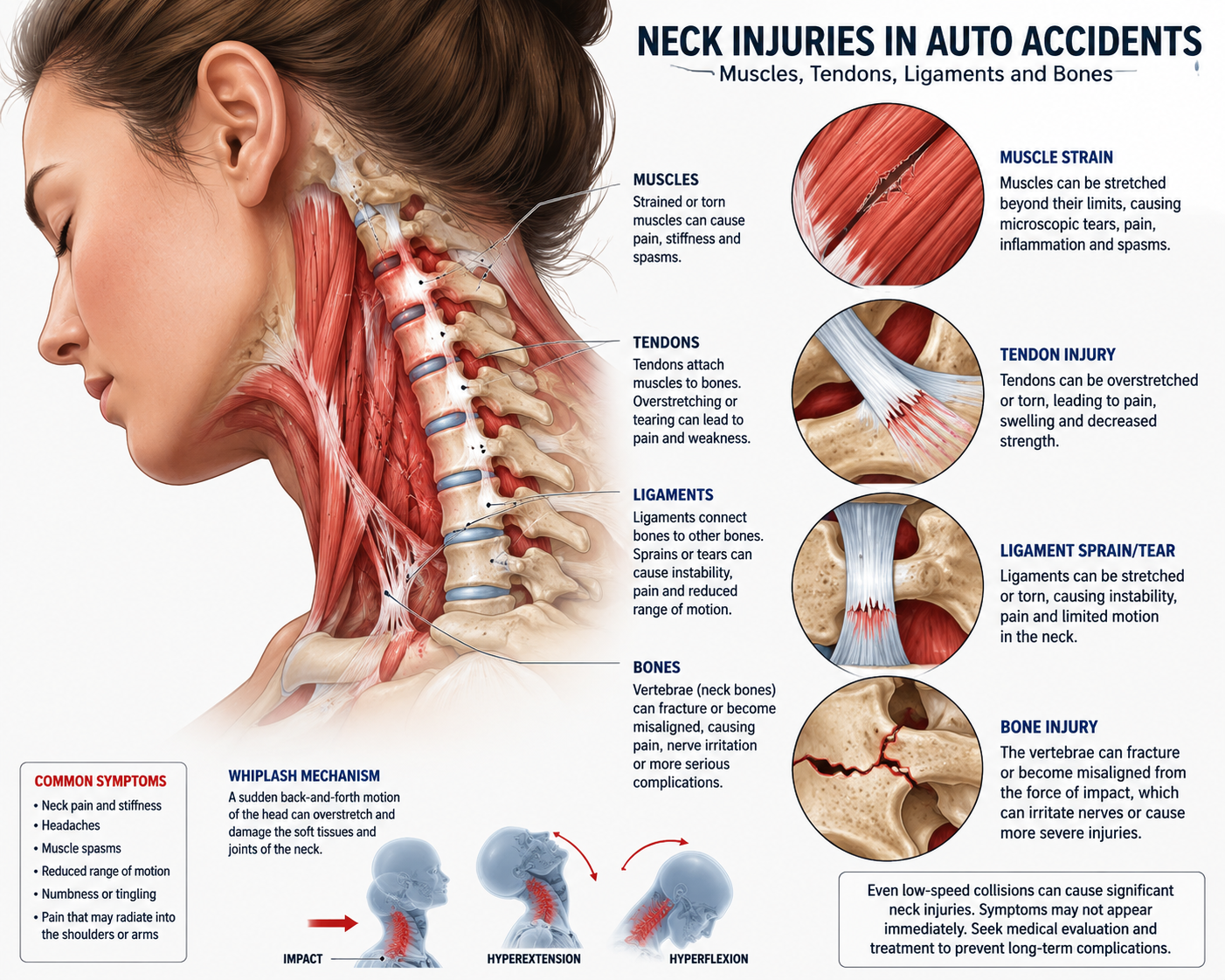
During a collision, your body may stop suddenly, but your head continues moving. This rapid back-and-forth motion is commonly called whiplash. Even at relatively low speeds, the forces involved can strain and injure the structures that support your neck.
Mild Neck Pain and Injury
In less severe accidents, the muscles and ligaments of the neck are often overstretched. Think of it like a sprain in another part of the body—but in your neck. These injuries can cause:
- Neck stiffness
- Soreness or tenderness
- Reduced range of motion
- Mild headaches
- Muscle spasms
These soft tissue injuries may not show up on X-rays, but they can still be painful and affect daily activities.
Moderate Neck Pain and Injury
As accident forces increase, injuries can involve more than just muscles and ligaments. The joints of the neck, including the small facet joints between vertebrae, can become irritated or inflamed. Discs between the vertebrae may also be injured.
Symptoms may include:
- Persistent neck pain
- Headaches at the base of the skull
- Pain between the shoulders
- Numbness or tingling into the arms
- Difficulty turning the head
Without proper treatment, these injuries can sometimes lead to chronic pain and recurring flare-ups.
Severe Neck Pain and Injury
More significant collisions can cause serious injuries such as disc herniations, nerve compression, fractures, or spinal instability. These injuries may produce:
- Severe neck pain
- Weakness in the arms or hands
- Significant numbness or tingling
- Loss of coordination
- Neurological symptoms, such as:
- Difficulty swallowing
- Trouble with balance or coordination
- Dizziness or vertigo
- Concussion
These cases require prompt evaluation and may need advanced imaging or specialist care.
How Chiropractic Care Can Help Auto Accident Neck Pain
Many car accident injuries involve the musculoskeletal system—the muscles, joints, ligaments, and connective tissues that support movement. Chiropractic care focuses on restoring normal function to these structures.
After a thorough examination, a chiropractor may use treatments such as:
- Gentle spinal adjustments
- Soft tissue therapy
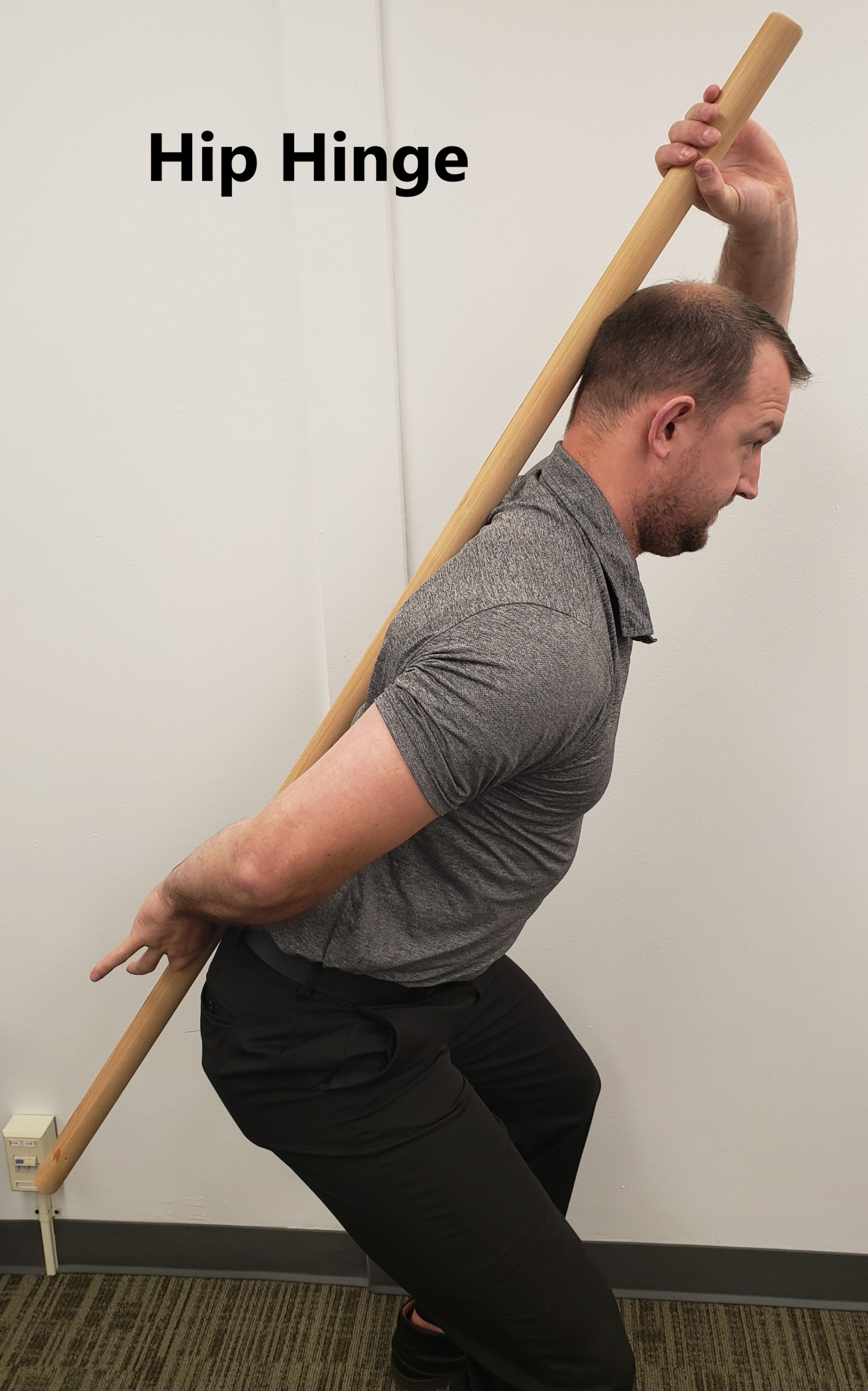
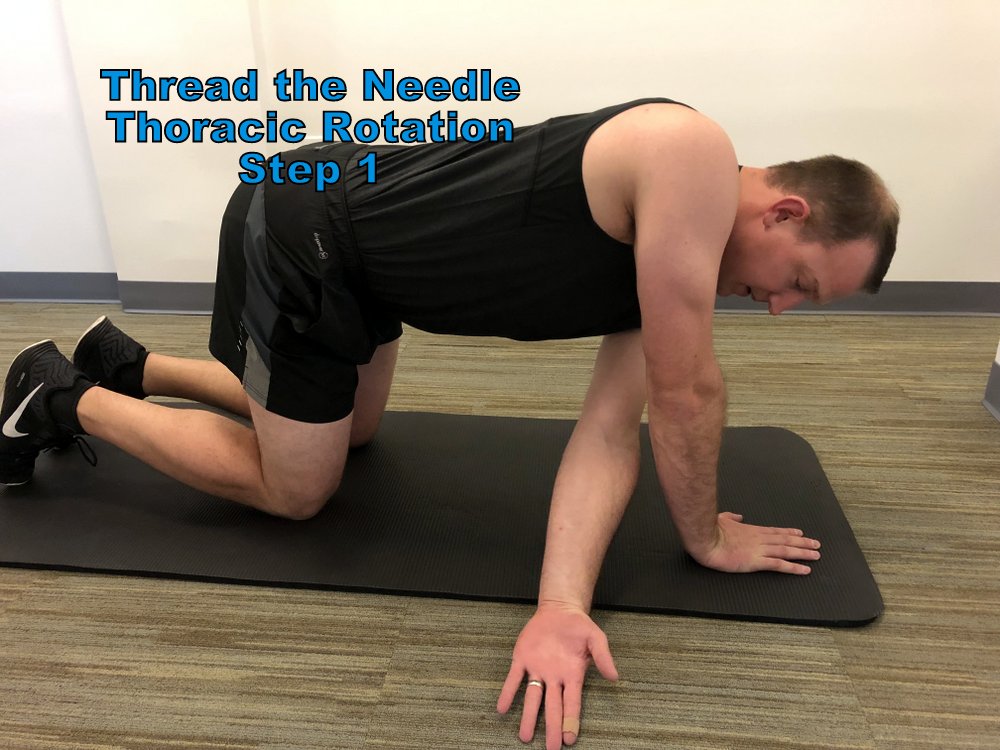
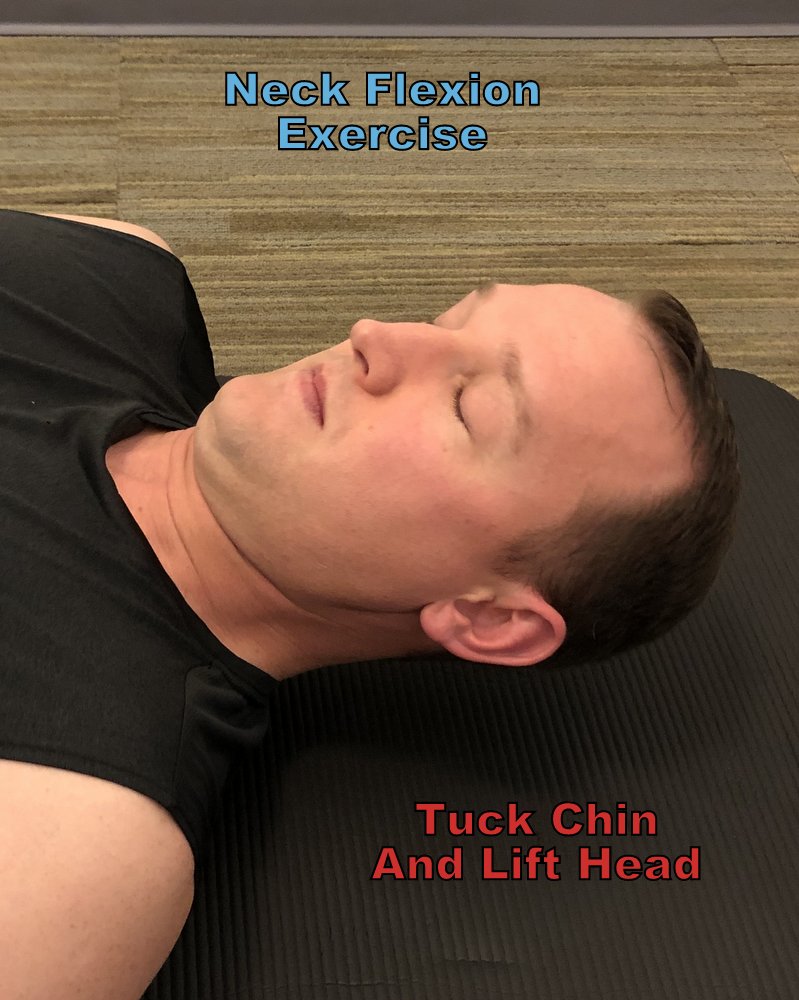
- Muscle rehabilitation exercises
- Stretching and mobility work
- Postural recommendations
The goals are to reduce pain, improve movement, decrease muscle tension, and help the body heal as efficiently as possible.
Early evaluation is important because untreated injuries can sometimes become chronic problems. Even if your symptoms seem mild, having your neck examined after an accident can help identify injuries before they worsen.
Don’t Ignore Neck Pain After an Accident
If you’re experiencing neck pain, headaches, stiffness, or other symptoms after a car accident, it’s worth getting checked. The sooner you understand what’s causing your symptoms, the sooner you can begin appropriate treatment.
At Cascade Chiropractic & Wellness, we are located in Portland’s Central Eastside and help patients recover from auto accident injuries with personalized chiropractic and soft tissue care.
If you’re a Portland-area patient and need help after a car accident, contact our office today to schedule an evaluation. If you’re outside our area, we encourage you to reach out to a trusted local chiropractor who can assess your injuries and guide your recovery.




Leave A Comment